WISEcode Insights

All Posts
Food additives

UPF Exposed: Estimated 10,000 Substances in Global Food Supply 

10,000+ substances added to food, many never independently tested for chronic exposure. This is a sharp increase from the 1980s when approximately 3,000 regulated substances were contained in approved foods.  The gap between what’s legal and what’s proven safe continues to widen. While regulatory bodies move at bureaucratic pace, manufacturers reformulate at market speed—leaving transparency […]

Read More

Why the UPF Lawsuit Became a Public Nuisance Question

For years, the conversation around ultra-processed food stayed in a familiar place: Personal responsibility. If people got sick, it was framed as a matter of choice – what they ate, how much they exercised, how disciplined they were. That framing worked as long as food was treated as a collection of individual products making isolated […]

Read More

The Kraft Mac & Cheese Divorce: Irreconcilable Differences

I’ve made Kraft Mac & Cheese for my kids. And… since we are being honest with one another, I’ve made it for myself when my wife and kids have left me home alone. Why? Because it’s delicious. It’s one of those foods that sneaks into your life through nostalgia and convenience. You grew up on […]

Read More

GRAS: The Regulatory Loophole That Swallowed the Grocery Store

San Francisco UPF Lawsuit #9: “Generally Recognized as Safe” (GRAS) In the historic San Francisco lawsuit against Big Food, the GRAS (Generally Recognized as Safe) designation is the ultimate battlefield. To the food giants, GRAS is a legal “shield.” To the City of San Francisco, it is a dangerous “loophole” that has allowed a chemical […]

Read More

The Bliss Point: The Mathematical Engineering of Overeating

San Francisco UPF Lawsuit #8: The Bliss Point The “Bliss Point” is not just a culinary term; it is a precise mathematical and psychophysical formula. It represents the moment the food industry shifted from being a provider of nourishment to an industry of engineered “craveability.” This is the point where food chemists discovered how to […]

Read More

UPF Exposed: GRAS Is Designed for Individual Ingredients, Not Systems

The GRAS framework was built to evaluate isolated, time‑tested substances, not industrial systems made from dozens of interacting components. Source In the News Young Adults Face Prediabetes Risk from UPF Consumption A USC Study from the Keck School of Medicine links ultra-processed food intake to blood sugar dysregulation in youth. Researchers tracked 85 young adults […]

Read More

UPF Exposed: Whole Foods, More Food, Fewer Calories

Whole foods let people eat more, feel fuller, and consume fewer calories – passive calorie control is real. Source In the News San Francisco’s Public-Nuisance Case Hits National TV A PBS NewsHour segment explains why San Francisco is suing 11 major UPF manufacturers, highlighting addiction-style design, chronic disease costs, and parallels to Big Tobacco. Once […]

Read More

Why Labels Were Never Enough

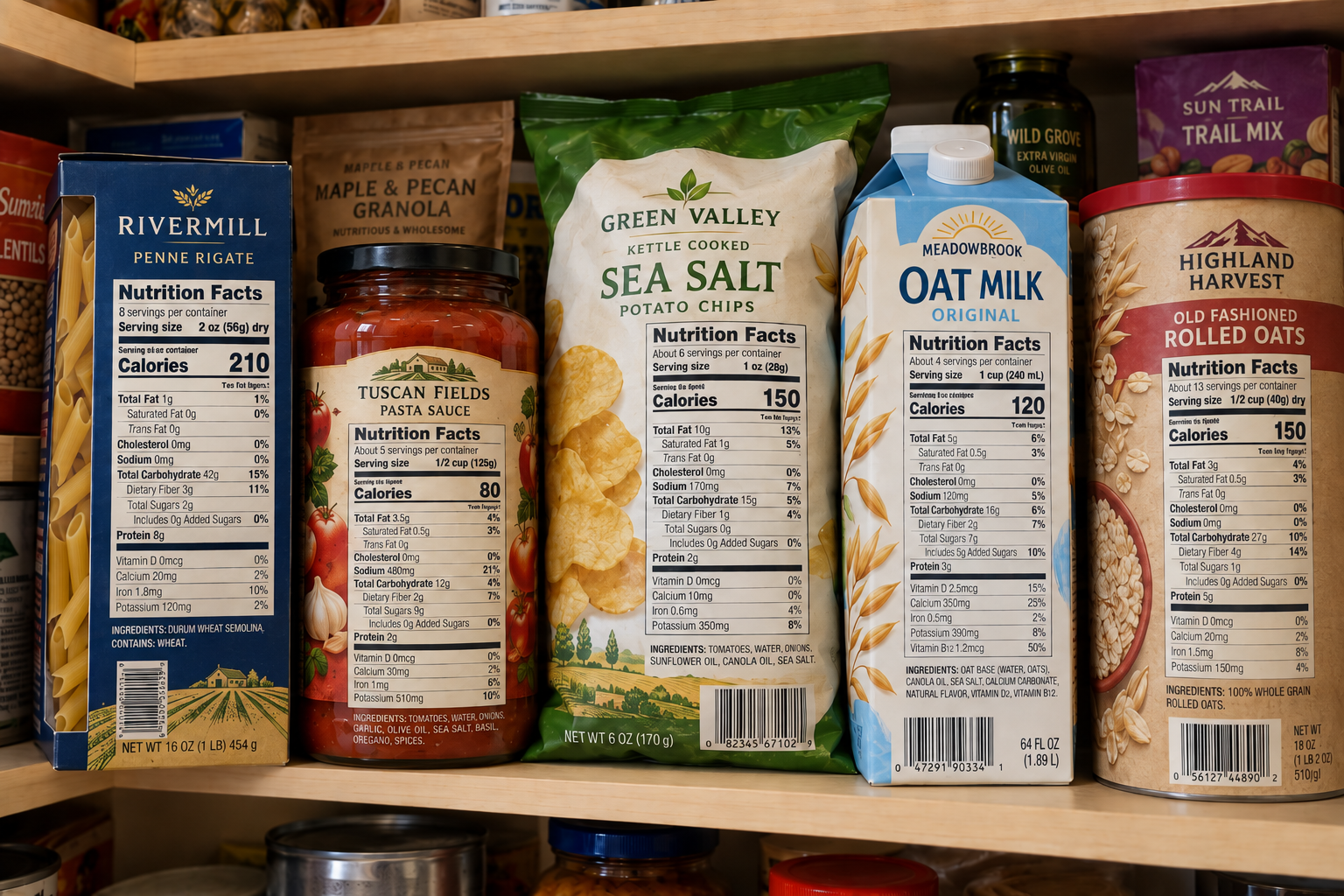
When concerns about ultra-processed foods started surfacing more publicly, the food industry’s response was consistent: “We already provide labels.” On the surface, that sounds reasonable. From a systems perspective, it isn’t. Nutrition labels were designed to disclose components, not to explain behavior. They tell you how much sugar, fat, sodium, or protein is present. They […]

Read More

UPF Exposed: FDA Guidance, UPF Supply Chain & Consumer Behavior

The recently released US Federal Dietary Guidelines call for fewer ultra-processed foods, but the lack of information around clear UPF definitions create barriers for both policies and individual food choices. Source In the News NIH-Funded Study Reanalysis Reveals Whole-Food Diets Support Higher Food Intake, Lower Caloric Consumption Researchers reanalyzing a tightly controlled NIH clinical trial […]

Read More

The Path to Dodge UPF Franchise Risks for Retailers

San Francisco UPF Lawsuit #7: Reducing Franchise Risks In the landmark San Francisco lawsuit filed in December 2025, the primary targets are the “Big Ten” manufacturers, which include General Mills, Kraft Heinz, PepsiCo, and Kellogg’s. But history teaches us that once the manufacturer is in the crosshairs, the retailer is never far behind. For grocery […]

Read More

The Bliss Point: When Food Became an Optimization Problem

The “Bliss Point” is a term most people have never heard, and that’s not an accident.  The Bliss Point refers to the specific combination of sugar, fat, salt, and texture that makes food maximally rewarding – without triggering the body’s natural sense of fullness. Not too little to be boring, not too much to be […]

Read More

SNAP, Soda, and the Coming War Over “Healthy” Food Access

Ultra-processed foods have shifted from nutrition debate to regulatory battleground. Eighteen U.S. states implemented SNAP restrictions on soda, candy, and sugary products beginning January 2026, positioning ultra-processed foods at the center of a policy war over health equity and food system control. For food brands that once hid behind barcodes and opaque labels, this marks […]

Read More