


The Wild West of Food Safety in America
For nearly 70 years, the United States has relied on a regulatory construct called GRAS – “Generally Recognized as Safe” – to govern thousands of chemicals in the US food supply. In 1958, Congress created the GRAS exemption in the Food Additives Amendment to protect the public from unsafe, novel food additives by requiring a demonstration of safety before they reached the market.
The intent was good. Americans deserved confidence that the ingredients in their food were rigorously vetted and safe for long-term consumption.
But intent does not equal outcome. Over time, GRAS has morphed into a broken, loophole-ridden system that now resembles the Wild West of food safety.
How the System Broke
- The Rise of Lab-Created Ingredients
As the food industry industrialized, chemists developed novel emulsifiers, flavor enhancers, stabilizers, sweeteners, and preservatives at a staggering pace. The FDA could not possibly keep up.
- 1997: FDA Gives Up.
Facing resource constraints and pressure from industry, the FDA shifted to a “voluntary notification” model. Instead of reviewing all new GRAS claims, companies could now self-police, and declare their own chemicals safe without ever informing the FDA.
- 2016: Self-Determination Codified
The FDA finalized the rule, locking in this voluntary, industry-driven model. Companies are legally allowed to keep their GRAS determinations secret, beyond public or government scrutiny.
The Numbers Concerning GRAS Today (WISEcode estimates)
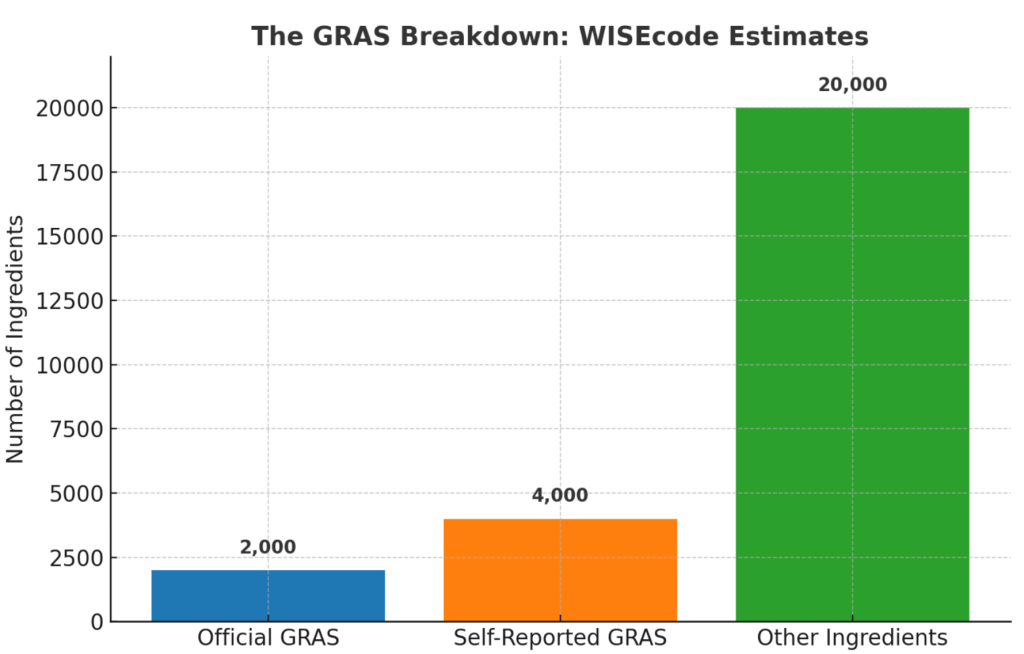
Public databases capture only a fraction of what is actually used in the food system. Here are WISEcode’s estimates based on our Food Intelligence Platform consisting of over 730,000 foods and billions of food attributes.:
- Around 2,000 officially recognized GRAS ingredients.
- Roughly 4,000 “self-reported” GRAS ingredients (companies disclosed their self-determinations to FDA).
- An estimated 20,000 additional substances in the food system – the “WTF” bucket of chemicals, flavors, stabilizers, and processing aids that operate outside FDA oversight and live in a regulatory gray zone.
Combined, more than 75% of the substances in the modern food supply are poorly mapped, weakly characterized, or effectively invisible within official oversight systems.
Why the Failure of GRAS Endangers Health
The breakdown of the GRAS system has left Americans exposed to tens of thousands of largely unexamined substances in everyday foods and beverages. These are not trivial unknowns; many classes of additives associated with GRAS or similar pathways are now linked in the scientific literature to serious health concerns.
According to studies, key risk areas include:
- Metabolic disorders
Certain artificial sweeteners, emulsifiers, and highly processed ingredients are associated with weight gain, insulin resistance, and a higher risk of Type 2 diabetes.
- Cardiovascular disease
Trans fats, sodium‑heavy preservatives, and other formulation choices have historically contributed to elevated blood lipids, hypertension, and increased cardiovascular risk.
- Gut disruption and inflammation
Emulsifiers, stabilizers, and some sweeteners can alter the gut microbiome and intestinal barrier function in ways that may promote inflammation and metabolic disease.
- Cancers and reproductive harms
Certain synthetic preservatives, contaminants, and other chemical additives raise concerns about carcinogenicity, endocrine disruption, and reproductive toxicity, especially when long‑term exposure is insufficiently studied.
GRAS has become the shield that allows untested or untracked ingredients to infiltrate our food supply, while the bill is paid in the form of rising chronic disease, shortened lifespans, and ballooning healthcare costs.
Waiting for comprehensive regulatory reform has proven unrealistic; nearly 70 years after GRAS was created, each major regulatory adjustment has helped to preserve or even expand industry self‑determination rather than tighten independent oversight.
A Better Way Forward: WISEcode
The solution will not come from Washington. It must come from the intersection of massive data and artificial intelligence. That is the promise of WISEcode:
- Codes for ultra-processing (UPF)
- Flags for harmful ingredients
- Clean label transparency that cuts through marketing spin
- And soon: a GRAS Code™ – an independent, AI-driven standard that classifies ingredients based on real science, cumulative evidence, and public transparency
GRAS Code is designed to become a living, adaptive standard that updates as new evidence emerges, providing a more protective, science‑driven view of ingredient safety than the legacy regulatory construct.
WISEcode’s Mission & Vision
At WISEcode, we believe food is personal, food is powerful, and food is the foundation of health. Every person deserves to know what they are really eating – not a government guess or an industry self-declaration.
We are building the world’s most comprehensive food intelligence platform:
- Nutrition data to enlighten.
- AI tools to empower.
- Human desire to improve lives.
Our mission is to deliver the best food data and the smartest AI tools, empowering everyone with the freedom to choose. Our vision is to unleash food intelligence from data to unlock the potential of food.
Information you can trust. Tools you can use. Outcomes that matter.
The era of GRAS is over. The era of WISEcode has begun.